Sea Change
How Brittany is developing sustainable tourism

As our ferry approaches the harbour, I notice the thickening fog has shrouded the stone jetty, turning the dockers into ghostly figures. But it can’t dampen our spirits. We’ve come to the island of Ouessant (Ushant by its British name) off the Finistère coast, on the first part of our trip to discover how Brittany is promoting sustainable tourism, and we can’t wait to meet a local woman.
Ondine Morin lives in Lampaul, Ouessant’s only village, where we arrive a short while later by shuttle bus. She and her husband make their living mainly from catching fish which they sell from a small shop in the village centre. When we meet up with her late in the morning, there are just a few pollock (lieu jaune) left from the day’s catch, as well as a couple of hapless lobsters, their claws tightly bound by rubber bands. But, as Ondine explains, her ‘pêche artisanale’ approach, means the focus is more on quality and sustainability than quantity. Unlike the supertrawlers that sweep the English Channel (La Manche) with their sophisticated radar systems and gigantic nets, the couple catch a modest 100 kg of fish on average per day, by rod and line, from their small boat (technically a ligneur).
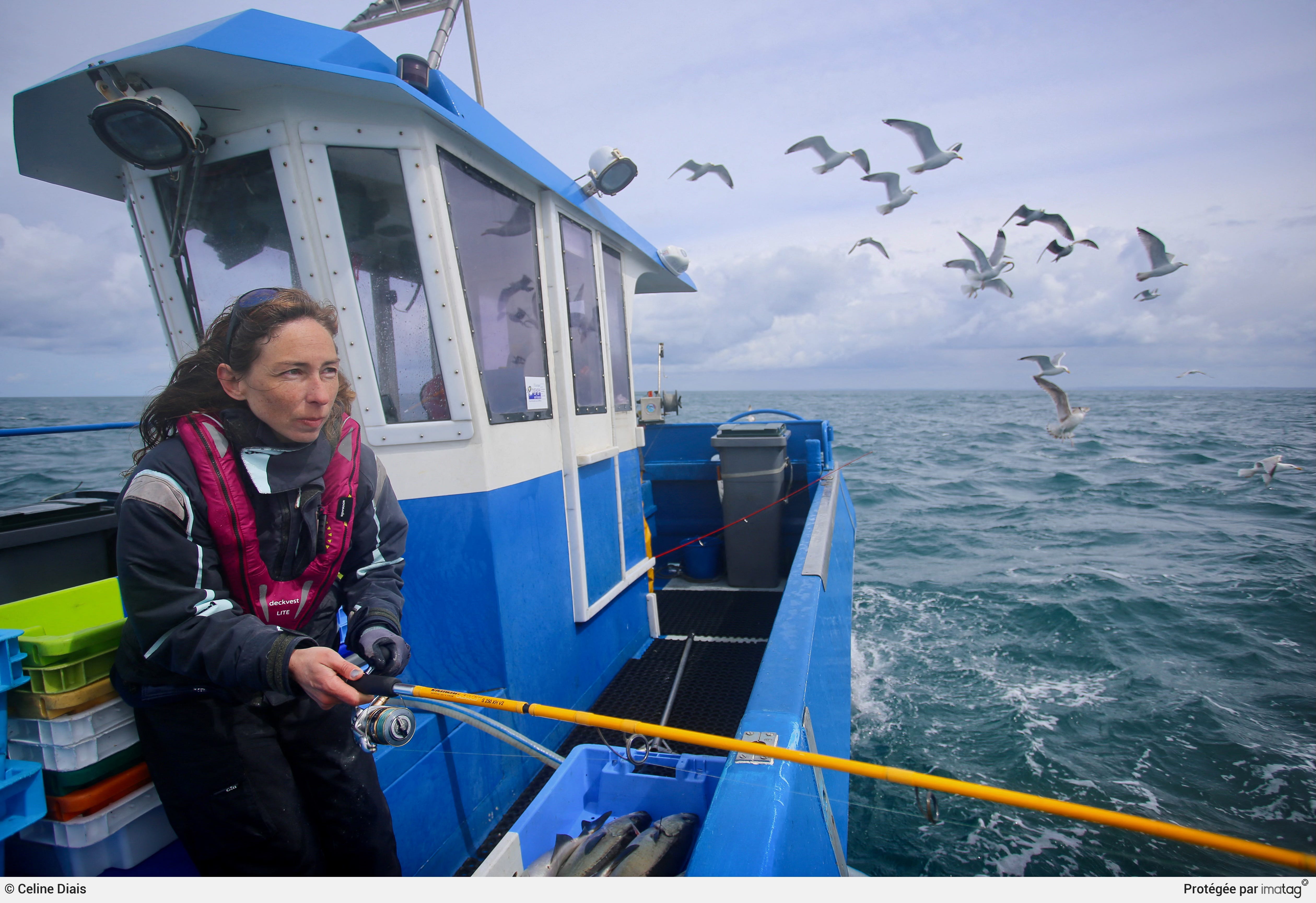
The boat is called Finis Terrae, or ‘end of the world’, an entirely appropriate name given that Ouessant lies at France’s most westerly point, a dozen miles or so from the mainland. But this windswept island with its rugged coastline, definitely feels more remote than that, as if a raging storm has flung it beyond the mouth of the Channel and into the wilds of the Atlantic. Shaped like a crab’s claw (or maybe a mermaid’s purse?) and barely six square miles in size, it is also surrounded by treacherous waters which have claimed many a vessel down the years, most notably the Drummond Castle in 1896. Sailing from South Africa to England, the liner was carrying 144 passengers and 102 crew. But it took the wrong course in impenetrable fog, ran aground, and sank in minutes. Tragically, only three survived. Nevertheless, the islanders of Ouessant and the Molène Archipelago (the cluster of small islands to the south east) did all they could to help, and ensured the bodies they recovered were given a Christian burial. As a mark of appreciation, according to the historical record, Queen Victoria authorised the funding of Lampaul’s ornate church spire.
More recently, in 1978, Brittany witnessed its worst environmental disaster when the supertanker, Amoco Cadiz, broke up, spilling oil along the length of the Finistère coastline. Inevitably, this took a catastrophic toll on seabirds and other wildlife. No wonder much has been done since to protect the area. A UNESCO biosphere was set up in 1988 around the Molène Archipelago, and this was extended in 2011 to cover Ouessant, and the Isle de Sein, further to the south in the Mer d’Iroise (Iroise Sea). In 2007, the Parc Naturel Marin d’Iroise - the first marine park in France - was created to strengthen the protection of the biosphere and several Natura 2000 sites, Ouessant-Molène included. To bring developments up to date, the Réserve naturelle nationale d’Iroise (a nature reserve at the heart of the park which further protects Molène) was significantly enlarged - from 40 to over 1000 hectares - in September 2021, to cover the archipelago as a whole.
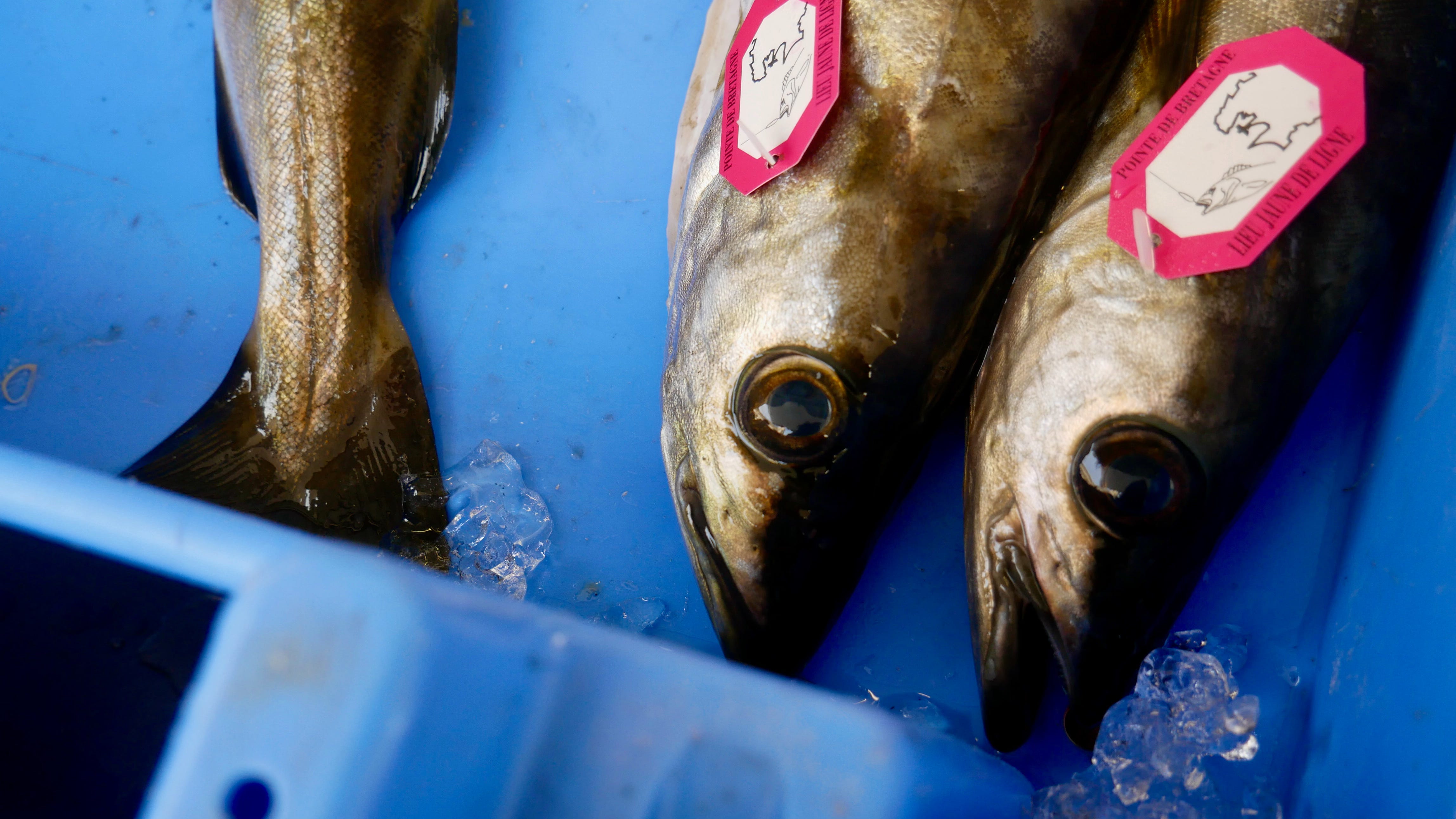
One of the park’s main aims is the ‘rational development of tourist, nautical and leisure activities compatible with the protection of marine ecosystems’. Indeed, not only does Ondine’s sister company, Kalon-Eusa (Breton for Heart of Ouessant), meet this aim, it is a model of small-scale sustainable tourism. Combining boat trips to learn about line fishing (pescatourism) with guided eco-tours of the island, it offers a range of activities for the rapidly growing, green holiday market. Fortunately, the fog begins to lift as we continue our tour (following an interesting visit to the church) on the cliffs beyond the village. This lets some benign sunshine through, and reveals a picturesque bay dotted with gently bobbing boats.
Ondine, whose name best translates as ‘sea spirit’, begins her story by telling us that she was born and raised on the island and that fishing (the line extends back to her grandfather) is in her family’s blood. However, she explains that there is little commercial fishing here (there is only one other company) due to the limited facilities in the port behind the bay, and the considerable risks involved, not least from the strong and unpredictable currents. In fact, as we also learn from her, over 90% of Ouessant’s economy is based on tourism, and the 800 plus inhabitants of the island are dependent on the mainland for supplies (although they are aiming for energy self-sufficiency via renewable sources). The fishing is also restricted more to the summer months due to the unfavourable, and frequently stormy, weather at other times of the year.
While she may be a small operator at sea as well as on land, it soon becomes apparent why Ondine has spoken about sustainable fishing (pêche durable) at several major conferences and appeared regularly in the French (and German) media. Basically, her knowledge of the subject - including the importance of giving fish a ‘biological rest’ while they are spawning - is as deep as it is wide. The same goes for the cultural heritage of the island and its natural environment. Later, as we conclude the tour by walking along the beach in the bay, she tells us all about algue (seaweed). I am surprised to discover, for example, that the Iroise Sea holds the largest kelp field in Europe. I am also intrigued to hear about a company on Ouessant (Algue et Mer) which makes a range of health and beauty products from the other varieties of seaweed locally, all of which are organic certified. Even more impressive, the company is the only one in the world to use a red seaweed called Neptune’s Harpoon which it harvests under patent from the bay.
In the evening, after nightfall and under a huge moon, we continue our exploration of the island as we set off by e-bike to see the nearby lighthouses (there are five altogether). Watching the beams swing silently around as they pierce the darkness is an eerily magical experience that no one lucky enough to stay here should miss out on. For those who prefer expert input, Ondine offers guided tours of the lighthouses, by day or night, too.
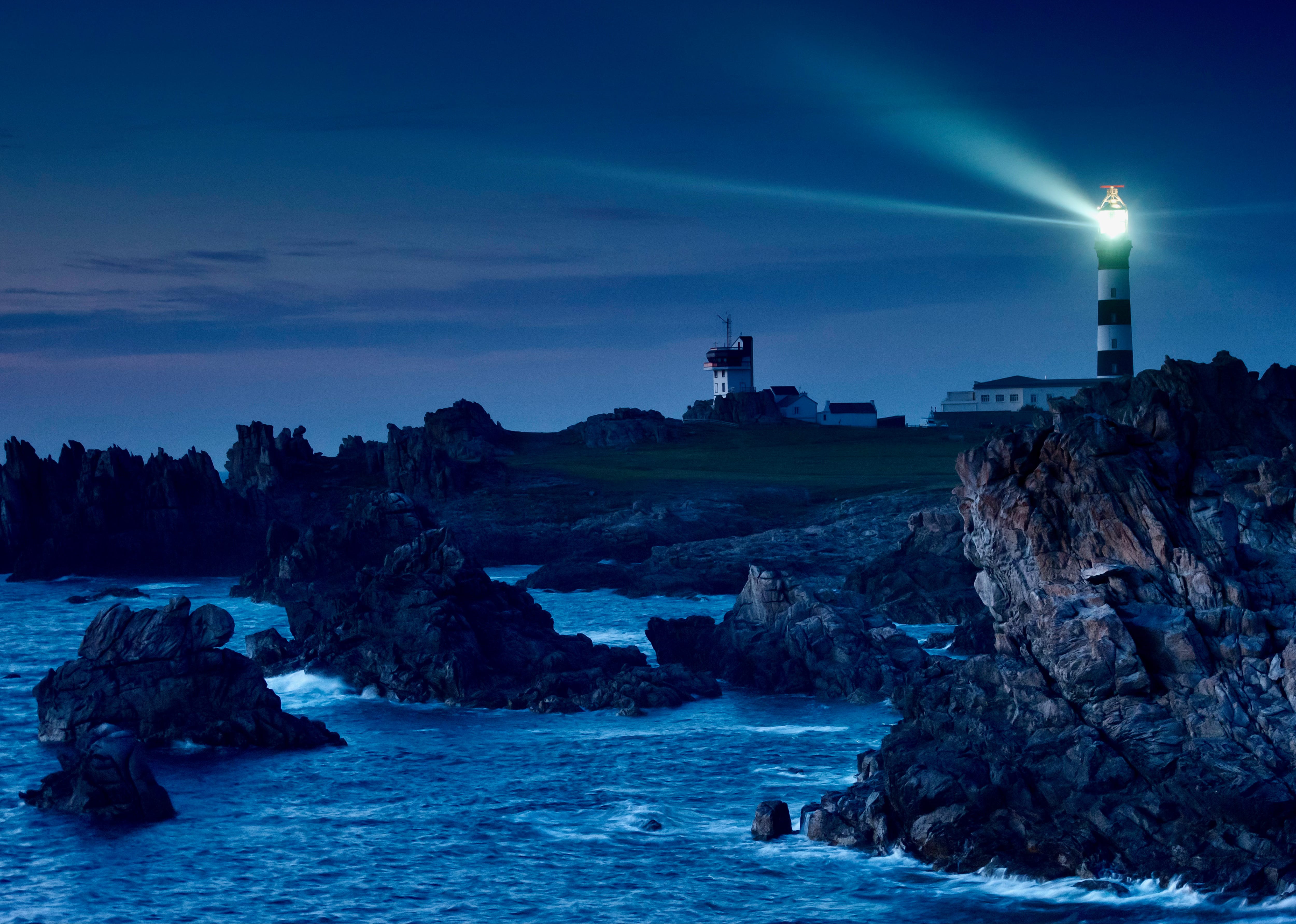
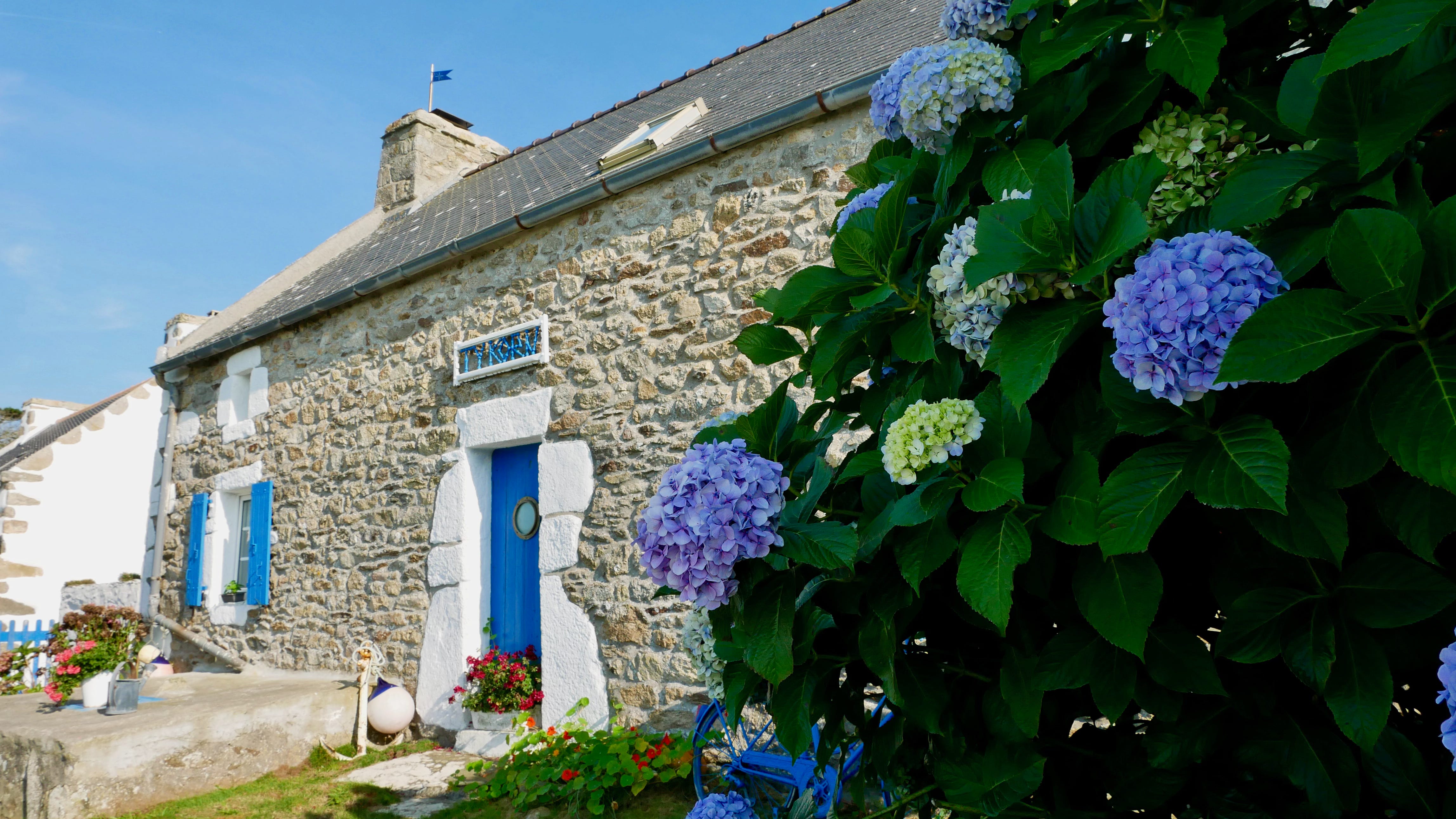
The next morning, we set off on the bikes again for the coastal area to the west of Lampaul where the Créac’h lighthouse - one of those we saw the previous night - is located. Unfortunately, the lighthouse itself is closed due to renovation, but the ‘steampunk style’ museum at the bottom more than compensates. Here, we find an array of lamps (at over 60 metres, the beam from the Créac’h lighthouse is one of the most powerful in the world) and a fascinating display on the Drummond Castle. In fact, as we also discover, there are no less than fifty shipwrecks (naufrages) around the island and the lighthouse technology developed in Brittany during the 19th century has been adopted well beyond its shores. Later, we take a bracing walk along the wildly beautiful and almost other-worldly (think the computer game Myst) coastline beneath the lighthouse, with its curiously craggy rocks and relentlessly crashing waves. Following this, we take a trip to the nearby Écomusée, passing numerous stone cottages painted prettily in white and blue (the colours of the virgin) along the way. Despite its small size (it is housed in a converted cottage) and simplicity, the museum creates a strongly authentic impression of how islanders lived traditionally, while the photographic display captures Ouessant’s unique and enduring maritime culture.
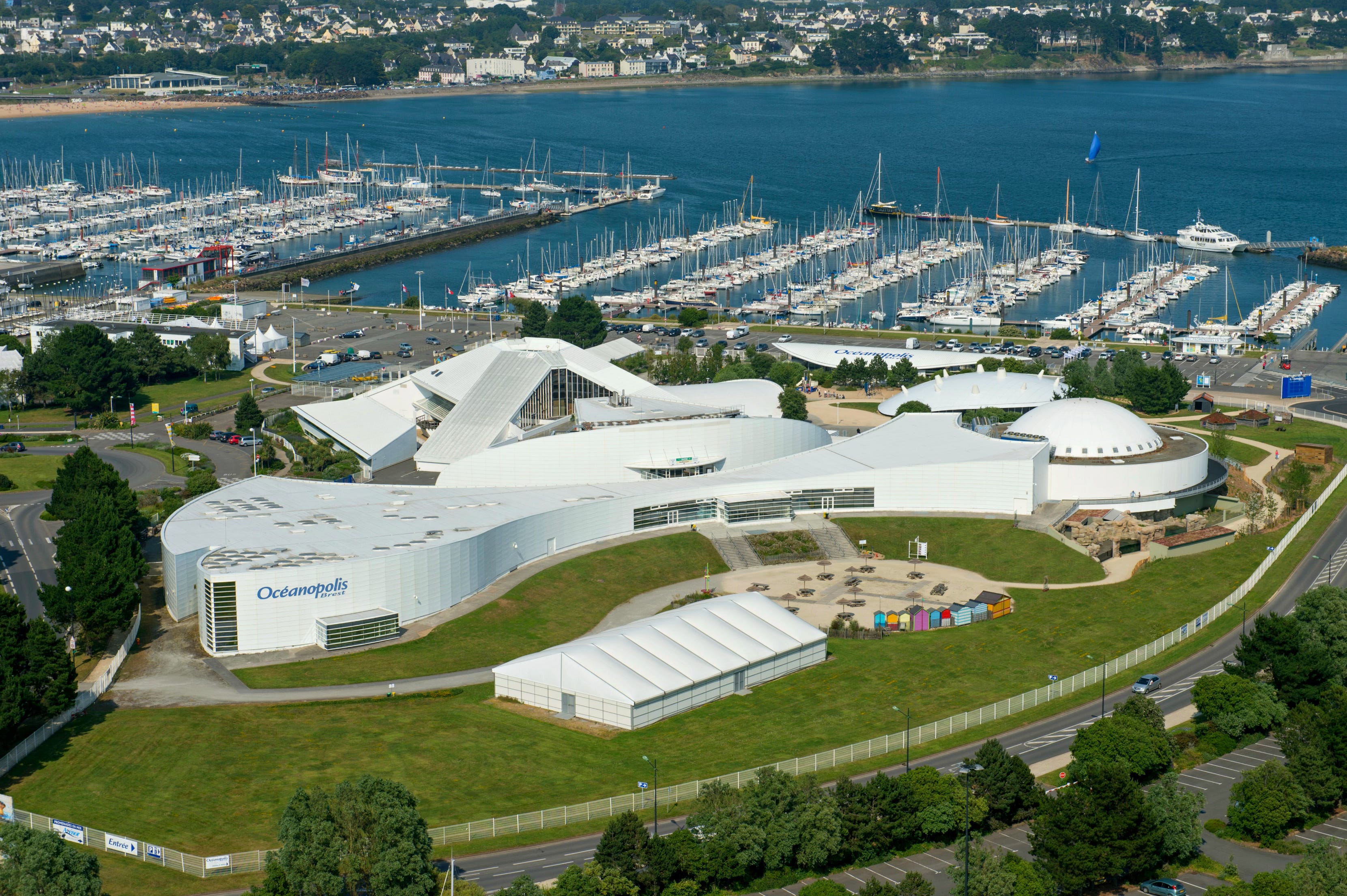
Back on the Finistère mainland for the final part of our trip, we head for Brest. The city was heavily bombed by the Allies in the war due to its strategic importance as a naval base, but its connection with the sea remains as strong as ever, and its urban regeneration has proceeded apace. There is no better example of both than Océanopolis, on the outskirsts of the city down by the Marina du Moulin Blanc. Opened in 1990, this futuristically designed ‘eco-aquarium on a grand scale’ is now Brittany’s largest tourist attraction with over 400,000 visitors per year. Indeed, as we dive in - guided by media relations officer, Julianne Liret, and public engagement with science coordinator, Tristan Hatin, PhD - I immediately begin to appreciate why the place has become so successful.
But I was a bit ambivalent beforehand: like many people, I’m instinctively uncomfortable about seeing animals, marine or otherwise, in captivity. To be fair, though, most of those here were born into the environment so they don’t know any different, and all are well looked after. More importantly, they serve a noble purpose: the development of scientific knowledge in pursuit of sustainable goals. In fact, science is at the heart of the mission driving Océanopolis, as reflected in its official title of Centre National de Culture Scientifique dédié à l’Océan, the collaborative research it facilitates on site, and its activity-based, pedagogic approach. The latter includes ‘mini-lab’ talks and ‘behind the scenes’ tours, both of which aim to inspire people in the same way that Ondine was when she visited. As Tristan, who is passionate about plankton, says, ‘We want to give the public the necessary tools to engage in the protection of the marine environment.’. Certainly, this approach, which includes a strong focus on the huge problem of plastic pollution, exemplifies the thinking behind the United Nations Decade of Ocean Science for Sustainable Development (2021-30). Not content to rest on its laurels, though, the centre has embarked on an ambitious redevelopment plan (Métamorphose) which promises an even more engaging experience.
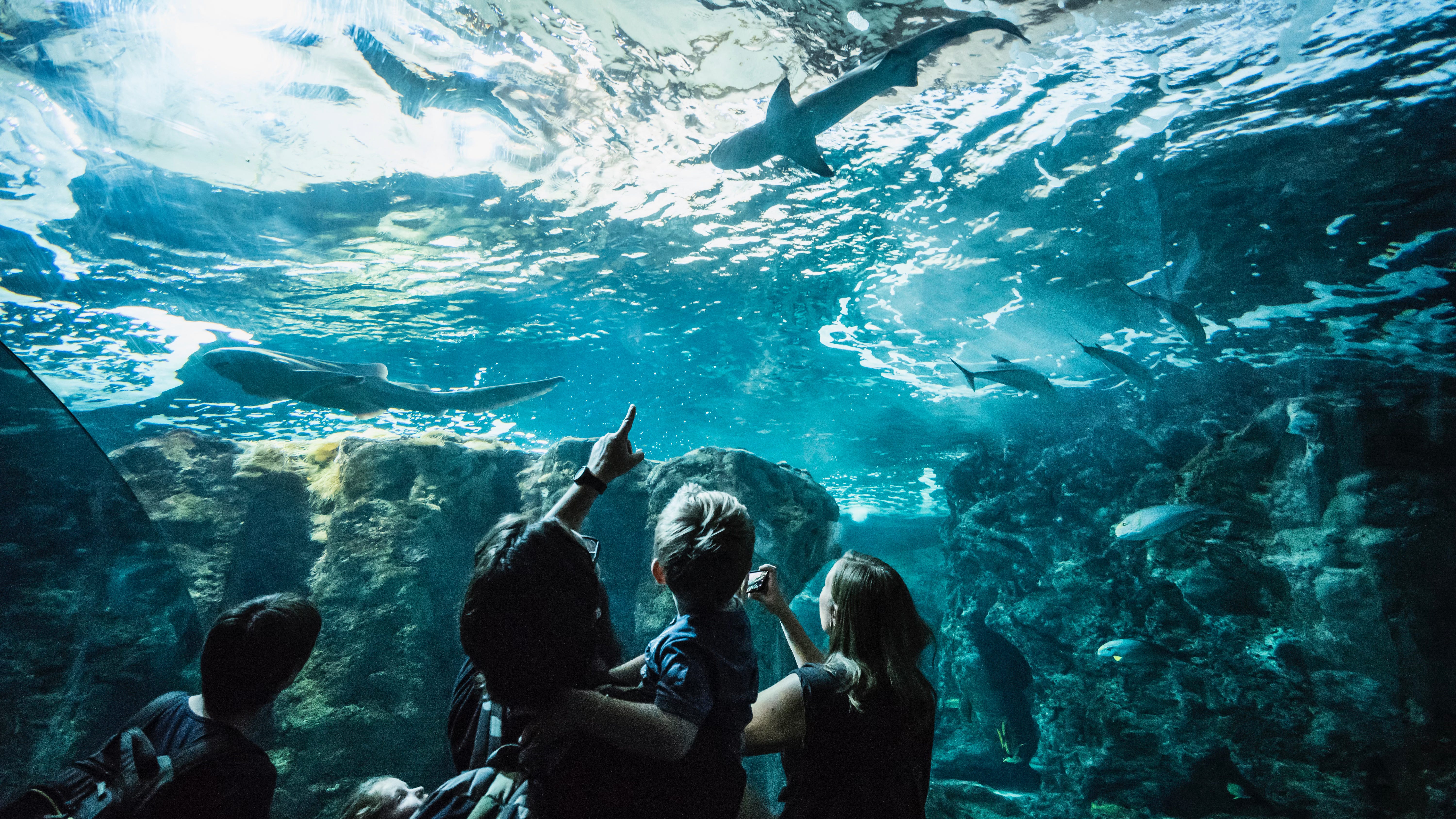
Talking of which, my favourite section (apart from the the Polar one with its adorable penguins) turns out to be the Pavilion Bretagne where we started, which features the Mer d’Iroise. Learning about the marine life locally - from sardines to seahorses - enables us to gain a deep insight into just how richly biodiverse it is, yet also fragile. Oh, and I mustn’t forget my encounter with the Octopus which stared back at me at one point whilst stuck to the glass - such a beguiling cephalopod, and far more intelligent than most appreciate. Not to mention the very strange creature I caught sight of in the seal aquarium, only to realise it was a human in diving gear doing the regular ‘window’ clean.
Our final stop is 70.8 (the number refers to the percentage of the earth’s surface covered by oceans). Opened as recently as May 2021, this is the maritime offshoot of marine-based, Océanopolis, and is situated up river in the port area of Brest, at Les Ateliers des Capucins (a former shipbuilding workshop converted into an enormous cultural centre). Here, we meet up with Pascale Nicol, who has a similar role to Tristan. She then takes us on a fascinating tour of the space which is organised thematically, and imaginatively designed like a ship with different decks. Exploring the first of these via its wonderfully interactive and immersive exhibits, we learn how we’ve barely begun to exploit the potential of the oceans as a biotechnological resource rich in organisms (seaweed included). We also discover how ‘blue’ energy - tidal, wave, and thermal - in addition to offshore wind, offers a viable alternative to fossil fuels. By contrast, we are reminded on the next level of how climate change threatens the vitally important Gulf Stream. But the feature that really captures our interest, following the first part of our trip, is the live display of shipping lanes in the Channel - one of the world’s busiest waterways. This shows clearly why its location at the Channel’s gateway has given Ouessant a maritime significance out of all proportion to its size.
As our visit comes to a close, I draw a couple of very positive conclusions. First, 70.8 complements Océanopolis perfectly. Second, the city of Brest, which also boasts the National Maritime Museum, undoubtedly deserves its status as the European capital of oceanography. However, in the back of my mind throughout, I’ve been thinking about the recently released documentary, Seaspiracy. This argues that our oceans are so seriously overfished - Ondine herself has noticed a marked decline in stocks as well as seabirds - that the whole notion of ‘sustainable fishing’ (artisanal apart) is senseless. All of which prompts me to ask Pascale the challenging question of how Brittany is going to balance the fishing and tourism on which its economy depends, with a strong commitment to sustainability. Not surprisingly, since I’ve put her on the spot, she answers me initially with a Gallic - sorry, Breton - shrug. But we finish our conversation by agreeing that the issues are complex, and that the way forward is frequently fogged by fishing politics.
Nevertheless, I am very clear about how encouraging our trip has been overall. Putting it poetically (the sea seems to have that effect) as well as succinctly, there are numerous beacons of hope in the Finistère region. Hopefully they will prove powerful enough to guide the way not just for visitors to this beautiful area of Brittany, but for locals too, and humanity as a whole.